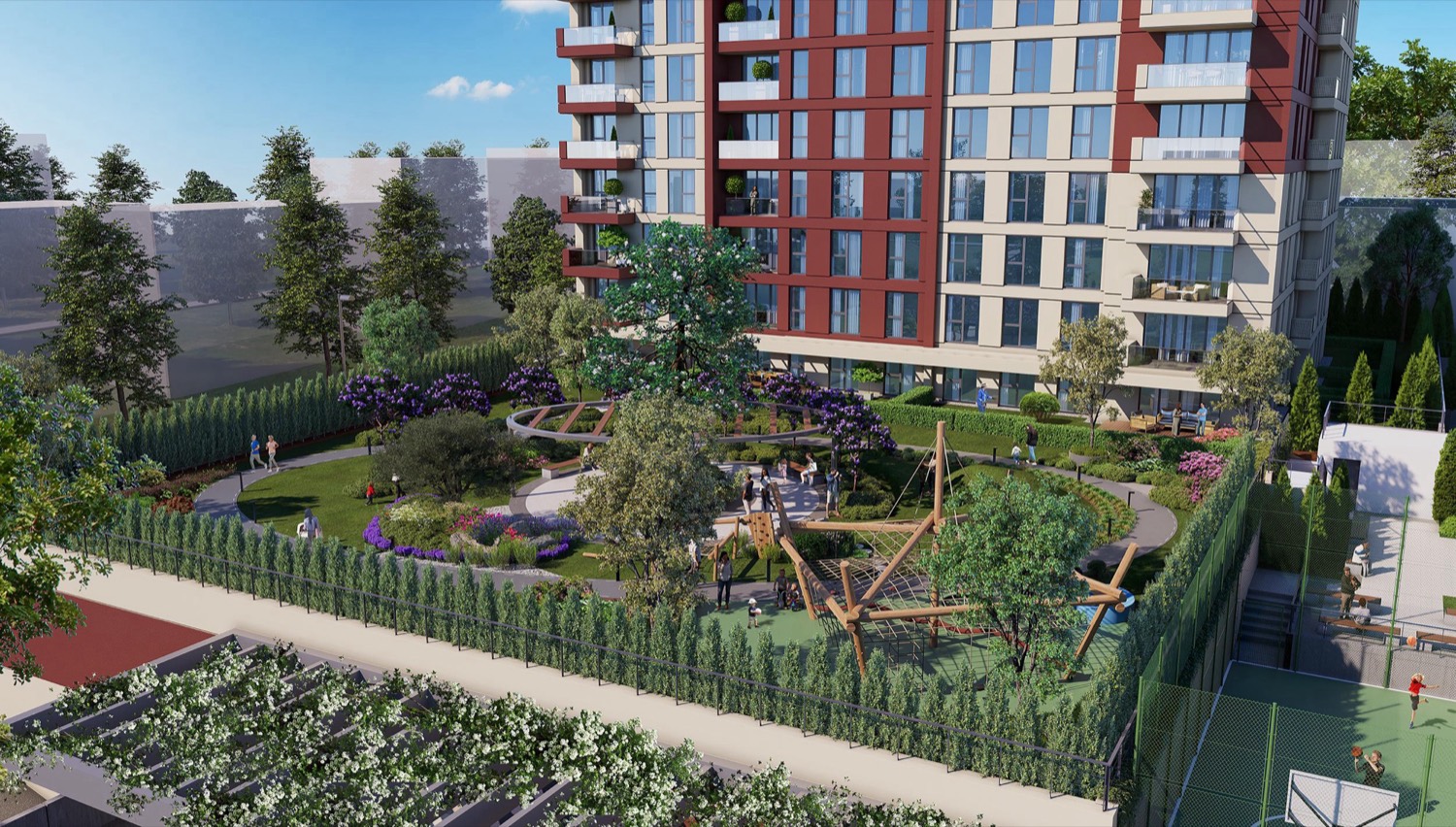
Most readers arrive at Turkish citizenship by investment looking at one of two extremes: a trophy apartment on the Bosphorus or the Golden Horn, priced well above what the programme requires, or the cheapest unit that clears the line on paper. The Basın Ekspres / Mahmutbey corridor on Istanbul's European side sits in a more useful place — a serviced, well-connected, brand-managed city apartment, near the airport, at an entry-level citizenship price.
This page is about that corridor and the kind of branded residence on offer there, not a single apartment we need to move. We are an independent advisory and a member of the Investment Migration Council (IMC), with offices in Istanbul, Athens, and Dubai. We are not a property seller. Our only product is the advice — which is why we can value a unit against you and tell you to walk away from a bad one. Everything below is general information, not investment or legal advice; verify the specifics independently before you commit.
The Basın Ekspres / Mahmutbey corridor: location and connectivity
Basın Ekspres is one of Istanbul's main business and commercial axes. It runs through the European-side districts around Mahmutbey and is anchored by corporate headquarters and large trade centres — İSTOÇ, MASKO, Tekstilkent, and Kuyumcukent — with the Mall of Istanbul a short distance away. It began life as an industrial and logistics belt and is being re-zoned by the municipality toward a designated "prestige service area," which is why you now see hotels, offices, and residential towers replacing warehouses.
What makes it relevant to a citizenship buyer is the transport. The corridor sits directly on the TEM and E5 motorways, the two arteries that cross the European side. It is roughly 25 minutes from Istanbul Airport, and the Mahmutbey metro connects it into the wider network. For a diaspora owner who flies in and out — from the Gulf, from Pakistan, from anywhere — proximity to the new airport is a practical asset, not a marketing line.
A note on language. You will see the corridor described by agents as a "new CBD," a "financial centre," or "the next big thing." Treat those as marketing framing, not fact. The verifiable position is more measured: an established commercial axis, well connected, in transition from industrial to service use (Deal-TR). That is a sound enough story without the embellishment.
A ready, branded city residence (features, as listed)
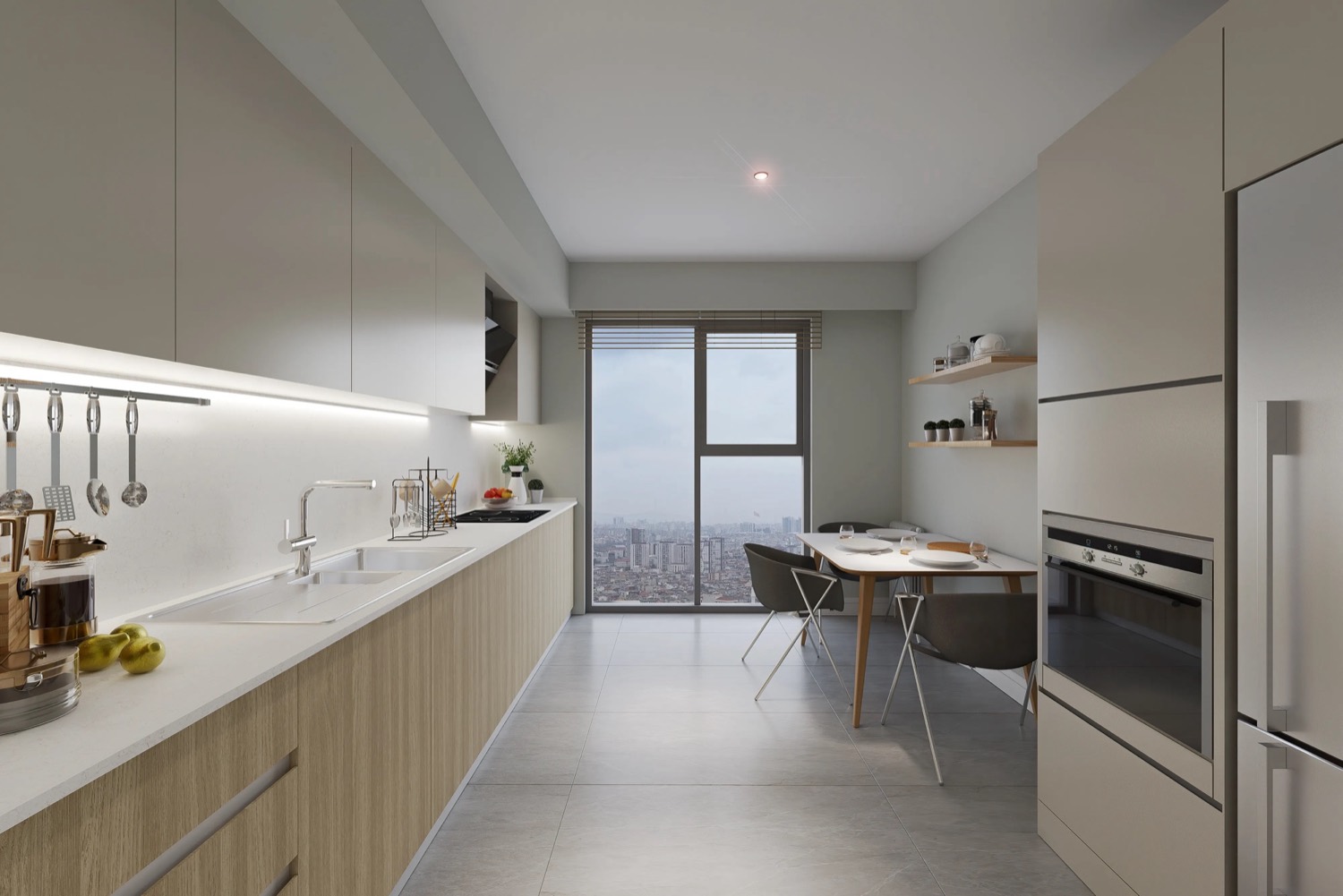
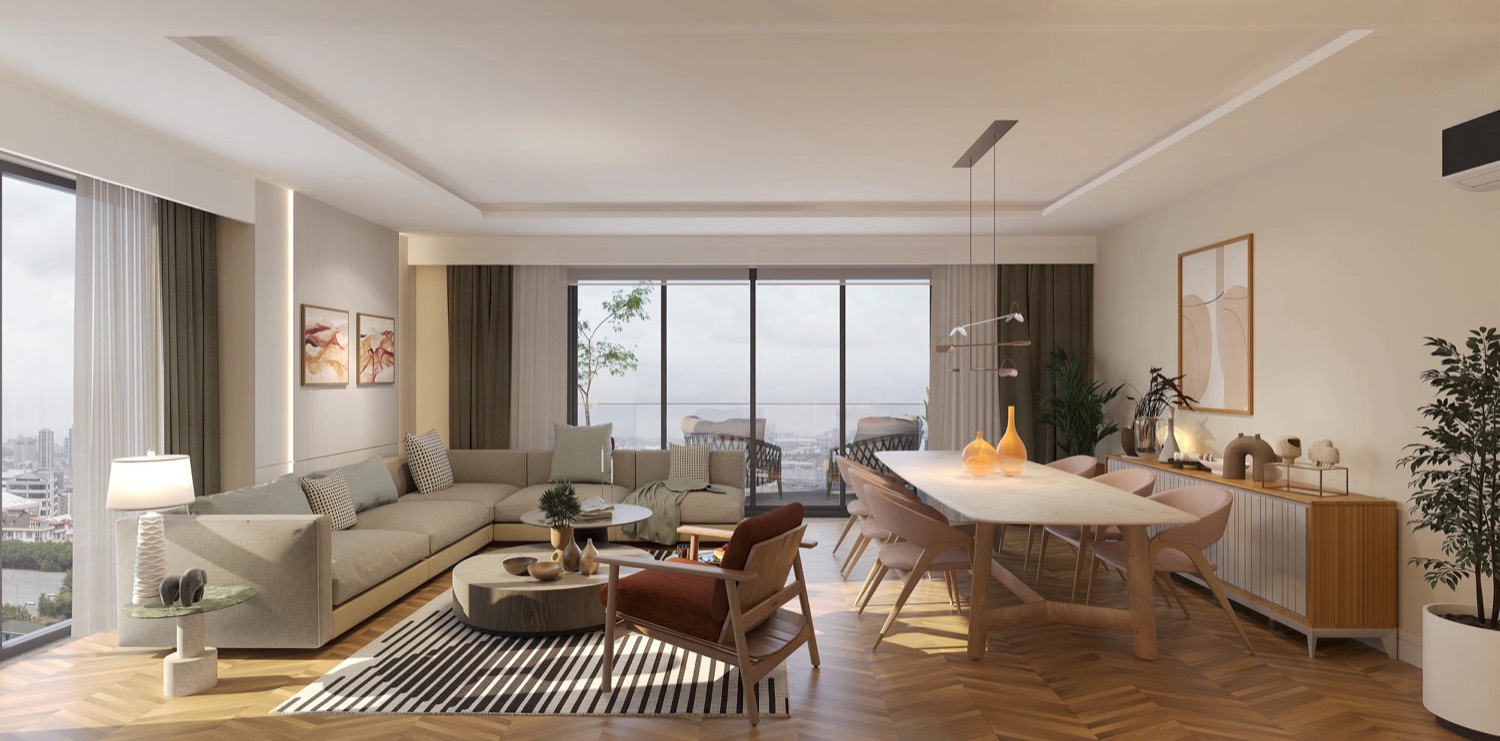
The specific offering that prompted this page is, according to the listing, a ready-to-move, vacant, branded two-bedroom apartment of around 112 m² on a high floor, with an open city view. Marketed amenities include 24/7 concierge, a fitness centre, indoor parking, and smart-home systems, with the title-deed transfer tax and VAT waived by the seller. The all-in figure quoted is around USD 430,000.
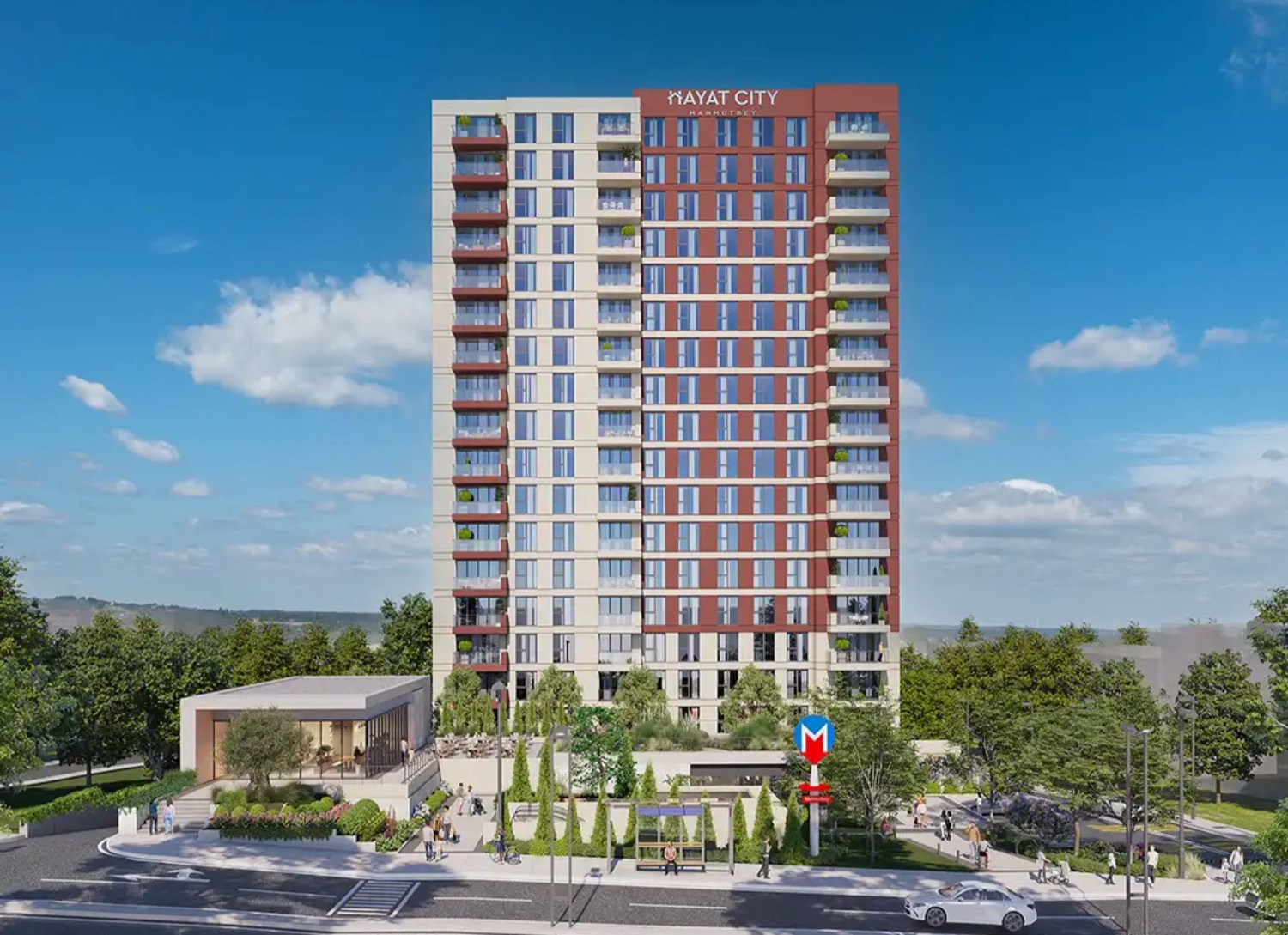
We attribute those details to the seller rather than assert them. The unit is marketed as a branded residence — the development is promoted as "Hayat City" — but we do not lean on the badge: a brand name is only ever as good as the operator and the contract behind it. The developer, the operator, and the exact project terms should all be confirmed in writing before you pay anything. The case for the corridor does not rest on the brand — it rests on connectivity, a ready serviced apartment, and the price.
Why it suits an entry-level citizenship buyer
This is not Bosphorus stock, and it is not trying to be. It suits a specific, sensible buyer: someone who wants the citizenship outcome at close to the programme minimum, in an asset they can actually use or let, without paying a waterfront premium they do not need.
- Ready and vacant. No construction risk and no wait for delivery. A finished apartment can be valued, transferred, and lived in or rented now — which also keeps the citizenship file simpler.
- Connected, not central-at-a-premium. You pay for access — airport, motorways, metro — not for a view that doubles the price. For an owner abroad most of the year, access beats postcode prestige.
- Serviced. Concierge, security, and on-site management matter when you are not in the country to deal with a leak or a tenant. A managed building is easier to hold remotely.
- Entry-level pricing. At roughly USD 430,000, it sits just above the threshold rather than far above it — the leverage point for a value-focused buyer, and the reason the next section matters as much as this one.
The threshold nuance: the valuation must clear $400,000
Here is the honest catch, and it is the most important paragraph on this page. The real-estate route requires a qualifying property worth at least USD 400,000, and that value is set by an SPK-licensed appraisal, not by the asking price. At an all-in of around USD 430,000, this unit sits only modestly above the line. That is fine — but only if the independent valuation comfortably clears USD 400,000. If the appraisal comes in lower, the file does not qualify, however attractive the apartment.
That is why an honest, un-inflated price and a genuine valuation matter more here than on a USD 700,000 trophy unit with a wide cushion. On an entry-level buy the margin is thin, so the numbers have to be real. We check this before you commit — comparing the asking price to the likely appraised value and telling you if the cushion is too small or the price is propped up. It ties directly to the trust theme below: the same inflated-valuation structures that put buyers at risk are most dangerous exactly at the threshold.
Buying safely: SPK valuation, bank payment, independent check
A second passport is only worth holding if it cannot be challenged later. In September 2025, Turkish authorities moved to revoke citizenships from roughly 451 investors linked to property files where the genuine value was found to fall short (Premium Citizen). The lesson is not that the programme is unsafe — it is that the file must be clean. Three safeguards do most of the work.
- A real SPK valuation. The qualifying property is appraised by an SPK-licensed report, and since 2024 these citizenship appraisals are routed through a designated state-affiliated valuer rather than a freely chosen one. A proper valuation that clears the threshold is your single biggest protection against a future challenge.
- Pay through Turkish banks, on the record. Payment must move through the banking system and be documented with a foreign-currency purchase certificate (Döviz Alım Belgesi), with the correct title deed in your name and the unit not previously used for a citizenship application by another foreigner. Cash-side arrangements and "cash-back" rebates that inflate the paper value are exactly what caused the revocations.
- An independent check, because we do not sell the property. We can commission an honest appraisal, flag an overpriced or non-qualifying unit, and walk you away from it — without a commission steering the call. On an entry-level buy near the threshold, that independence is the difference between a file that qualifies and one that does not.
The property must then be held for three years, and your spouse and children under 18 are included in the same application. Turkey permits dual citizenship, so in most cases you keep your existing passport — though whether your country of origin allows a second nationality is a separate question under its own law, and one to confirm at home. The legal basis for the route is Law No. 5901, Article 12(b), and Article 20 of its Implementing Regulation.
How GMC works, and an honest market note
- Pre-Check®. Before anything moves, we run a structured eligibility and document check on your situation, and on the specific unit, so you know where you stand before you commit money or time.
- One fixed professional fee. We charge a single fixed fee, quoted in writing before you start — not a percentage of your investment. A percentage quietly rewards an advisor for steering you to a pricier property. A fixed fee does not.
- Independent, and on the ground. Istanbul for the in-country work, Athens for the wider region, and Dubai for Gulf-based clients. As an IMC member, we hold to the council's standards. We do not sell the real estate.
A word on the market, because the brochure version leaves it out. Turkish house prices rose 26.36% in the year to February 2026 in nominal terms but fell 3.93% in real terms once inflation is stripped out; Istanbul was +27.99% nominal and −2.69% real (Global Property Guide). Foreign demand has cooled too: foreign home sales in 2025 totalled 21,534, down 9.4% — a nine-year low (P.A. Turkey). Read honestly, real prices are flat-to-down, and a buyer's market gives you room to negotiate and to insist on an honest valuation. The case for this corridor is the citizenship, the connectivity, and a ready serviced home — not a promise of fast capital gains we cannot make.
A decision on a citizenship application typically takes several months and is never guaranteed — it is granted by the Turkish authorities on a clean, qualifying file. Start with the full programme in our Turkish citizenship by investment guide, and see the real, all-in numbers on the cost page.
Frequently asked questions
Is property on the Basın Ekspres corridor eligible for Turkish citizenship?
Is this a hotel-branded residence?
Why does the USD 430,000 price matter if the threshold is USD 400,000?
How far is the corridor from Istanbul Airport?
Do I have to live in the apartment to get citizenship?
Is a Turkish apartment a good investment right now?
Sources
- Investment Migration Council (IMC)
- Deal-TR — the importance of the Basın Ekspres area
- Global Property Guide — Turkey house price history
- P.A. Turkey — foreign home sales fall to a nine-year low
- Premium Citizen — Turkey moves to revoke 451 citizenships
- Invest in Türkiye — official investment portal
- Turkish Citizenship Law No. 5901 (overview)